Golden Bund
Pudong, Shanghai, China
A new chapter for Shanghai's northern waterfront
类型
Urban plan, Urban renewal
客户
Shanghai Jinqiao (GROUP) Limited Company
规模
Plan: 34.4 km², site: 1.8 km²
挑战
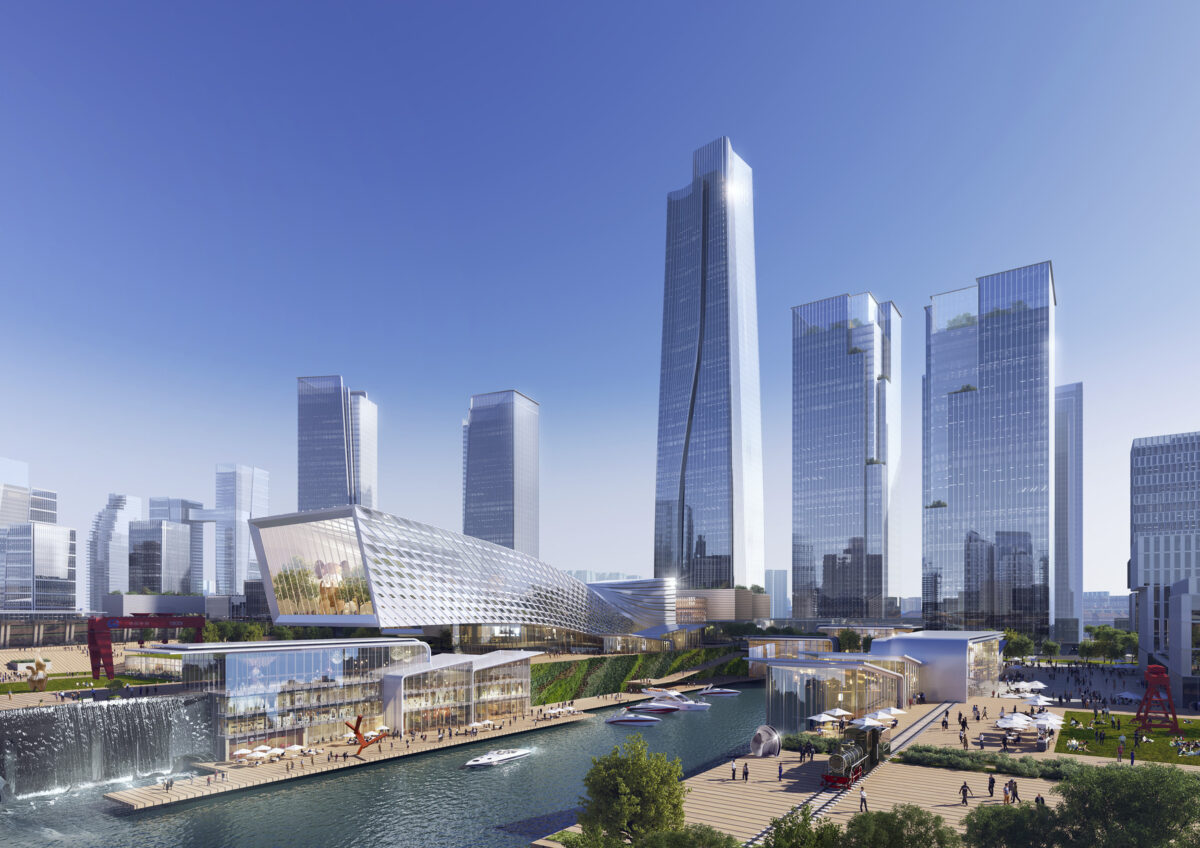
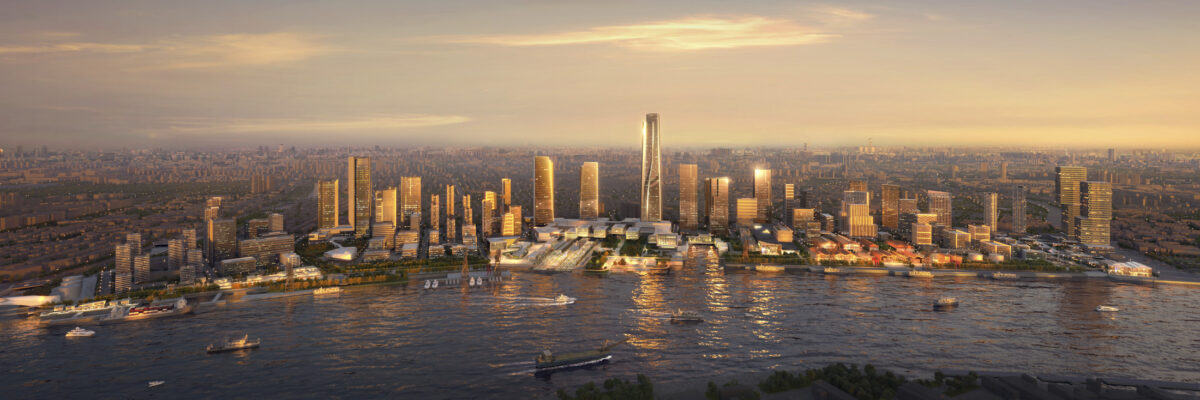
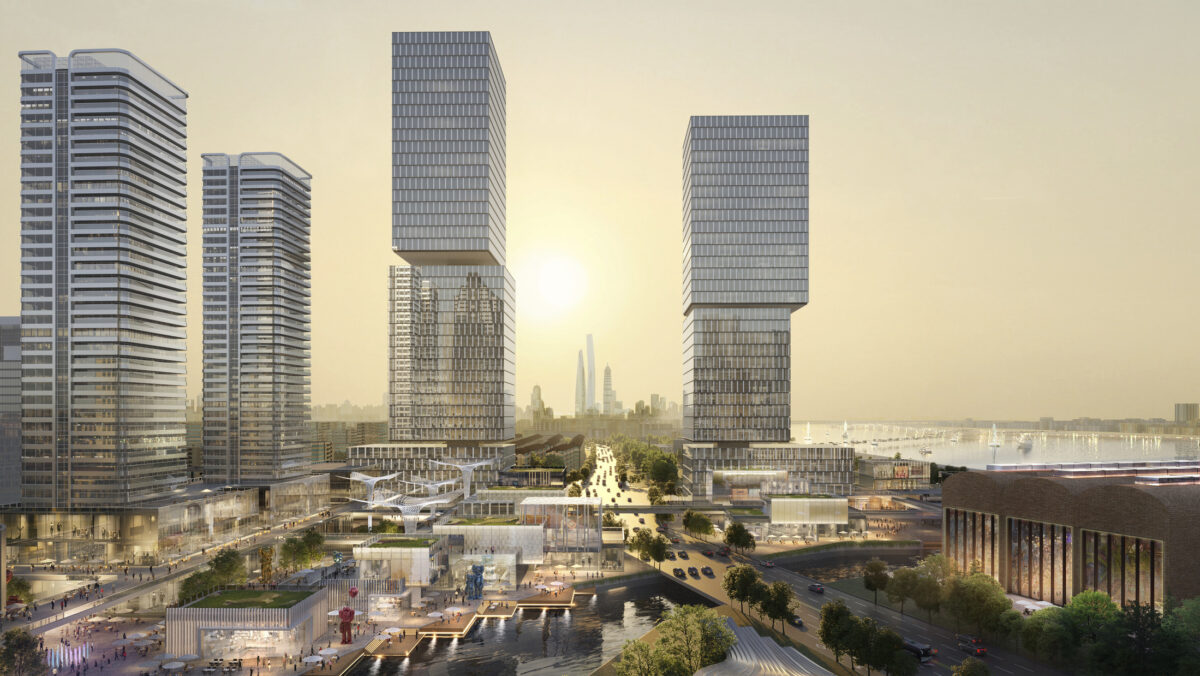
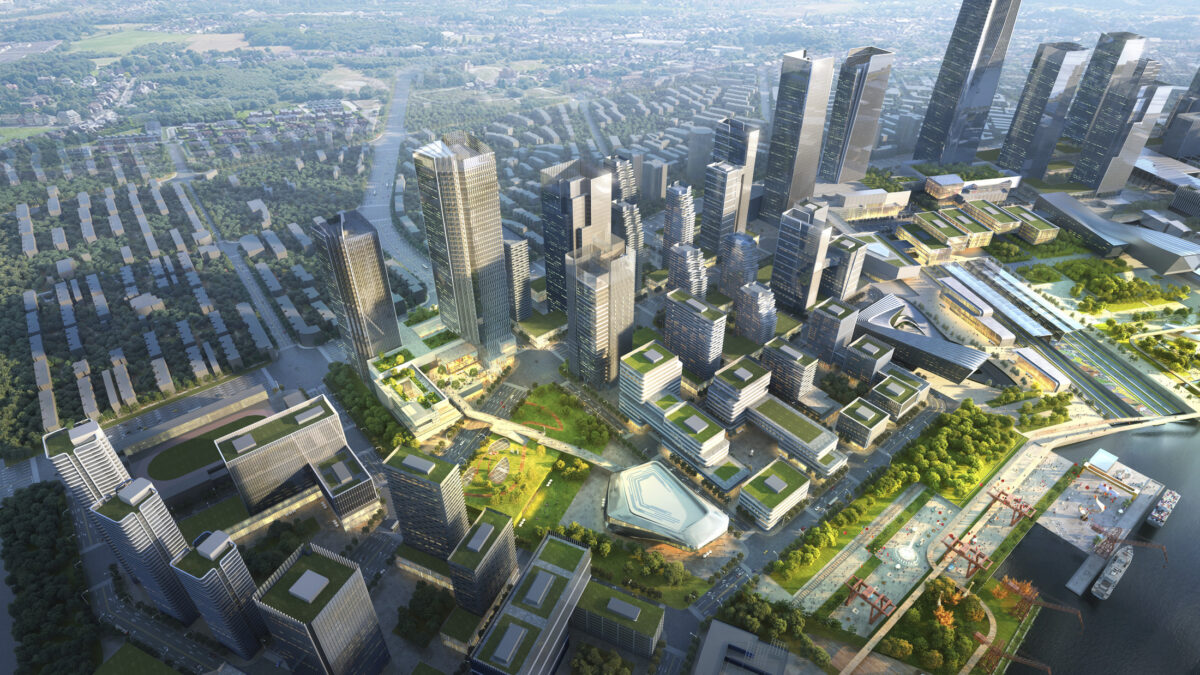
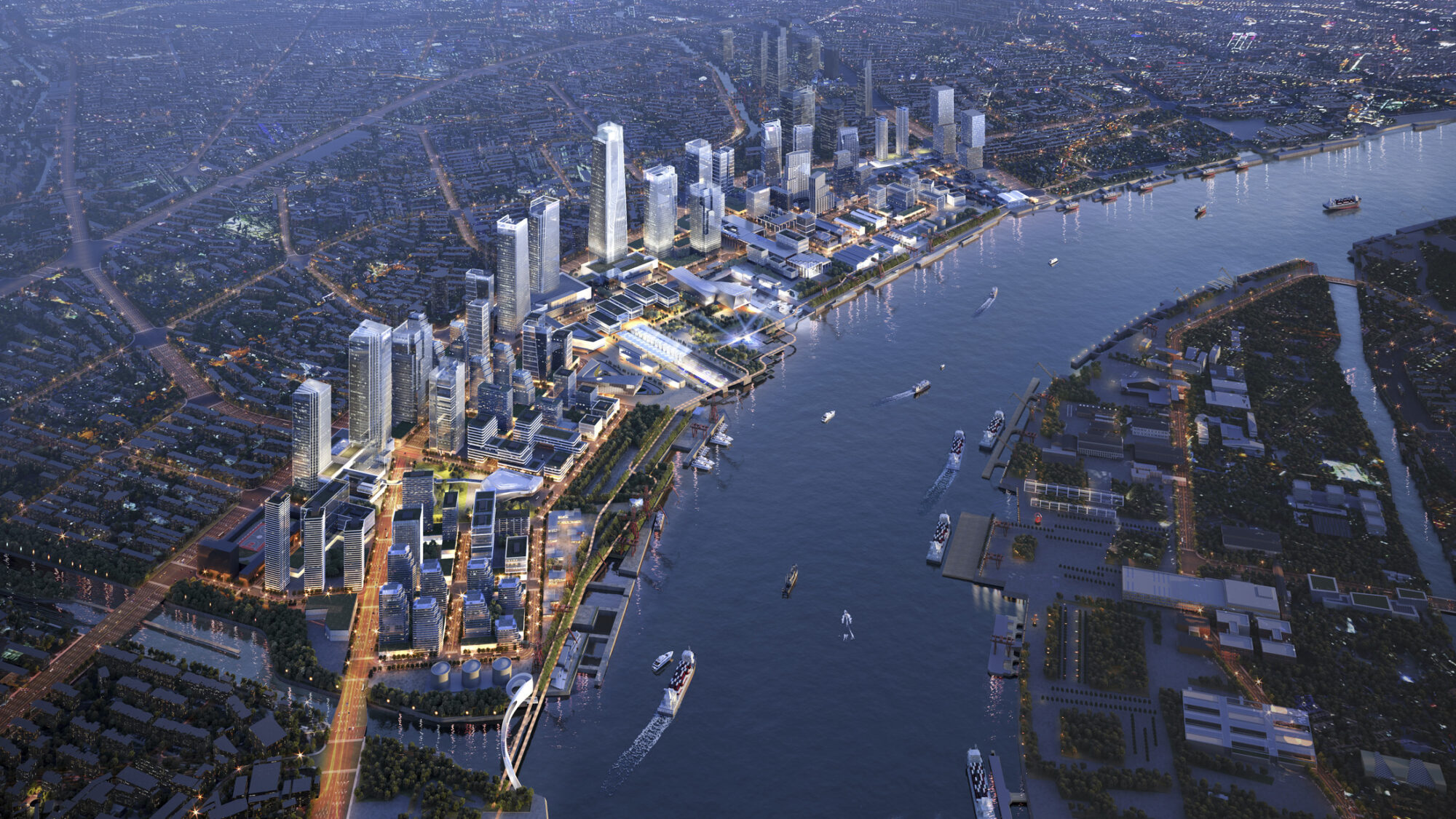
Golden Bund is a competition-winning urban concept for the regeneration of the former Hudong Shipyard site on the eastern bank of the Huangpu River in Pudong, a 1.8km² site within a wider 34.4km² study area that represents the next major stage in Shanghai's long-running waterfront transformation. Developed in collaboration with SPC and KPMG, Benoy's proposal positions the site as the northern anchor of the Huangpu River's development sequence, following the Lujiazui Golden Triangle and Qiantan New Bund. The programme brings together digital innovation industries, arts, cultural and sports facilities, heritage conservation and public riverfront, within a mixed-use framework oriented around the site's industrial past.
解决方案
The Hudong Shipyard, founded in 1928 and one of China's most significant shipbuilding facilities, relocated from the Pudong site to Changxing Island in 2023, opening one of the most historically layered parcels on the Huangpu for regeneration. The proposal selectively preserves shipyard structures with distinctive industrial character, adopting different strategies for each building based on its spatial qualities and cultural significance. Four successive groups of heritage facades along the riverfront echo the historic factory buildings on Fuxingdao Island across the water, preserving the memory of the site within a contemporary urban fabric.
结果
The masterplan is structured around three interconnected functional zones, supported by a new river crossing, three transit-oriented rail stations and an extended pedestrian network along the riverfront. The proposal targets carbon neutrality by 2060 through six integrated low-carbon measures across energy generation, passive efficiency and building management. The ambition is to establish Golden Bund as a model for industrial waterfront regeneration, one that draws its identity from the site's shipbuilding heritage while positioning it as a centre for digital innovation and design within Shanghai's wider urban economy.